
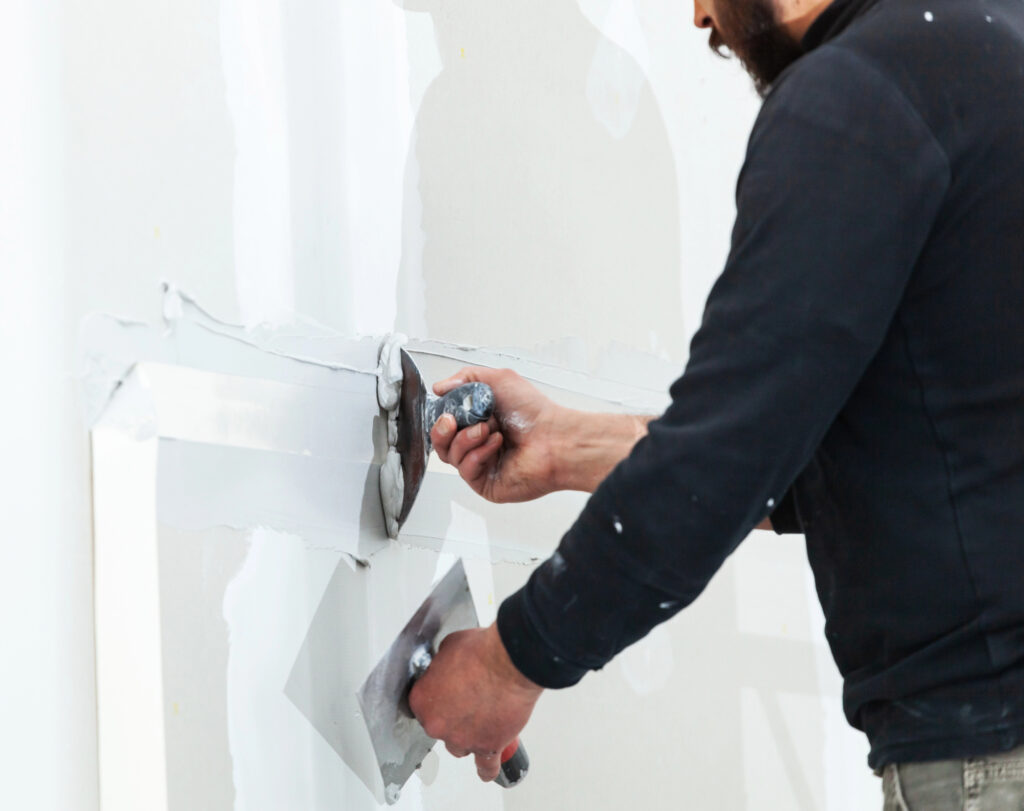
Understanding Drywall Finishes: A Beginner-Friendly Guide to Smoother Walls
Drywall finishing might sound like one of those obscure terms tossed around by contractors, but if you’re updating your home, it’s something you should absolutely understand. Whether you’re refreshing your living room, redoing the guest bedroom, or finishing a basement in the chillier corners of Minnesota, knowing how drywall finishing works can help you avoid surprises and make smarter decisions.
Drywall isn’t finished just because it’s been screwed to the studs. Nope, that part is only the beginning. What really makes drywall look like a smooth, clean wall (instead of a patchwork of joints and screw holes) is the finishing process. And yes, there are different levels of drywall finishing, six of them, to be exact.
Let’s walk through them together, one level at a time.
Level 0: Just the Basics (Literally Just Boards on a Wall)
Imagine your drywall looking like a rough draft. No tape, no mud, no smoothing. Just raw sheets attached to the wall. That’s Level 0. It’s usually used in spaces that haven’t even started the finishing process yet. You might see this in new builds, storage spaces, or if a contractor had to leave in a hurry.
You wouldn’t want to stop here unless you plan to use the space for something very temporary or strictly utilitarian.
Level 1: A Little Love with Tape
Level 1 takes it up a tiny notch. Now the seams between drywall boards have been covered with joint tape, and that tape has been embedded in some compound (that gooey stuff called “mud”). That’s it, though. It’s a raw look but slightly less primitive than Level 0.
This level is fine for walls in utility closets, attics, or anywhere aesthetics take a back seat.
Level 2: Sealed but Still Rough
At this point, you start seeing a wall that’s getting some real attention. After the tape is applied, a thin layer of joint compound is spread over it, and the screw holes are filled. It’s a functional finish, not a pretty one.
This is a common stopping point for garages or workshops, places that might get a coat of paint but aren’t being judged by their visual appeal. If you plan to tile over the drywall or install paneling, Level 2 is often more than enough.
Level 3: Starting to Look Like a Real Wall
Welcome to the mid-range of drywall finishing. Here, everything you did in Level 2 gets another layer of joint compound. At this stage, things are smoother, and you’re approaching paint-ready territory, but only if your finish plans include texture, like a knockdown or orange-peel texture.
If you plan to do any kind of texturing on your walls, Level 3 is your best bet before applying that texture.
Level 4: The Standard Finish (A.K.A. What Most People Want)
This is the go-to finish for most painted or wallpapered walls. At Level 4, all seams and screws are coated with multiple layers of joint compound, followed by a careful sanding to make the surface as smooth as possible.
This level of drywall finishing is a great match for low-sheen paint or standard wallpaper. For many homes in places like Maple Grove and surrounding Minnesota towns, this is the default for rooms that are expected to be cozy, attractive, and well-lit.
Level 5: The Smoothest Finish Money Can Buy
Level 5 is the gold standard, a flawless, polished look. On top of everything done in Level 4, a skim coat is applied across the entire surface. A skim coat is a paper-thin layer of mud that covers all imperfections and leaves you with a nearly flawless canvas.
This level is ideal for spaces with high-gloss paint, large windows, or directional lighting. If sunlight hits your walls just so, every bump and dimple will show unless you opt for a Level 5 finish.
Here’s how a skim coat can be applied:
- Roller: Joint compound is thinned out and rolled on, then smoothed with a wide blade.
- Taping Knife: A small amount of mud is dabbed and then feathered out evenly.
- Sprayer: Pros often use airless sprayers for big jobs, creating a super even finish (though cleanup isn’t for the faint of heart).
So, Which Level Is Right for You?
Choosing your drywall finish level isn’t just about being fancy, it’s about matching your space and your goals.
- Utility spaces: Go for Level 1 or 2. It saves time, money, and effort.
- Living rooms, bedrooms: Level 4 is typically ideal, offering smoothness without the premium cost of a Level 5.
- Ceilings and high-light areas: Level 5 is a smart investment. Natural light pouring in through windows can make even tiny imperfections stand out like a sore thumb.
And let’s not forget the Minnesota factor. With wild swings in humidity and temperature, drywall can expand or contract ever so slightly with the seasons. This makes the finishing job, and who does it, all the more important. An experienced drywall finishing crew knows how to prepare joints and seams that can weather the climate without cracking or showing defects too soon.
Final Thoughts: Don’t Skip the Finish Line
Drywall finishing might not be glamorous, but it’s essential. Just like makeup on stage actors or frosting on a cake, it’s the final touch that makes all the difference. Whether you’re going for cozy minimalism or magazine-worthy glam, the level of finish you choose will shape how your home looks and feels.
If you’re updating your home and wondering what finish level is right for your space, don’t guess. Reach out to local drywall finishing pros who know the ins and outs of drywall, from tape to texture, and can help you get it right the first time.
Call today to schedule your drywall finishing consultation with a trusted local team. Let your walls finally live up to the rest of your beautiful home.